I’ve read a few dystopian novels in my time – Orwell’s 1984, Burgess’ A Clockwork Orange, Zamyatin’s We, Huxley’s Brave New World to name some – and I’m sure that I’ll have read a few more before this decade is out. The concept of exploring the impact of modern day phenomena in a not too distant future through our growing experience of human nature makes for a compelling novel, and Bradbury’s Fahrenheit 451 is certainly no exception.
Written in 1953, Fahrenheit 451 came into being during a period of great post-war tension and uncertainty over the world’s future in a climate dominated by the spectre of the Cold War. In the previous year, on November 1st, the US tested its first thermonuclear warhead in the South Pacific, which boasted a yield 100 times larger than that of the bomb dropped on Hiroshima only seven years before. The ‘Doomsday Clock’ maintained by the Bulletin of the Atomic Scientists, shows that in 1953 the clock was positioned at ‘2 minutes to midnight‘ – the tied-closest the clock has ever been to striking nuclear midnight. You can see an article I wrote earlier on the clock here.
Of equal parts fascination and terror is the fact that the only other occasion that the clock struck 2 minutes to midnight was this year, on January 25th – a mere two weeks ago. This deserves an immense amount of attention on its own merits, but suffice it to say right now that Fahrenheit 451 and its vision of an apocalyptic cataclysm is as relevant today as it was 65 years ago.
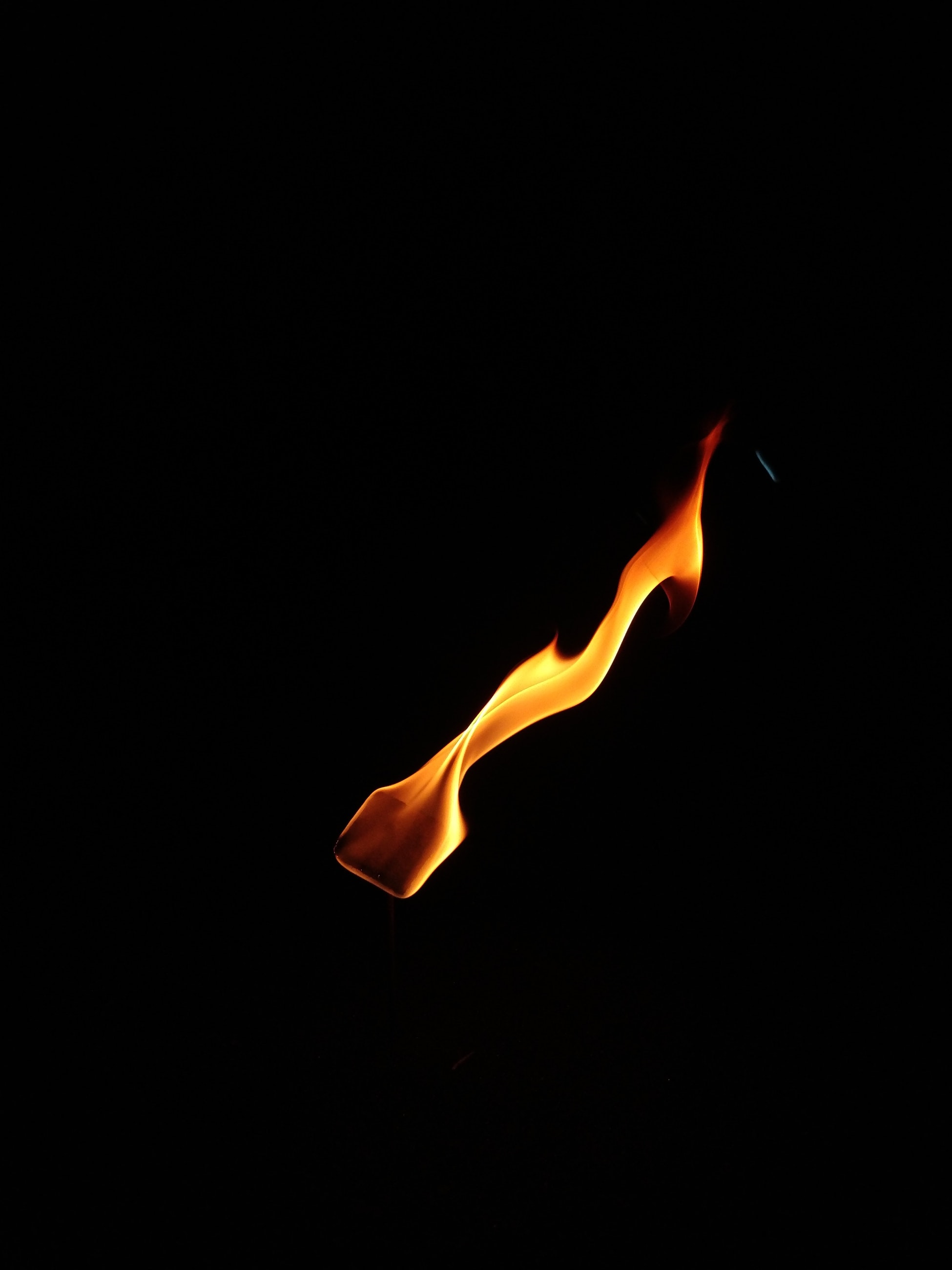
The novel follows a short time in the life of ‘fireman’ Guy Montag, a member of an institution that no longer eliminates fires but instead initiates them, with the intention of destroying that most venerable of kindling – books.
The plot follows a rather predictable dystopian story arc of realisation, reflection and action, resulting in one of the more entertaining and dramatic finales in the sub-genre. Montag’s superior, a man named Beatty, composes what is in my mind (recency bias acknowledged) one of the greatest and most poignant monologues I’ve ever encountered. I was reading in my car while waiting for a friend to finish work, and as streams of people poured from the sliding doors of the venue in front of me, I sat entranced, reading aloud in a mock-American accent this powerful description of why these firemen burn books and how this society reached the point it did.
As far as dystopian novels go, I think it’s one of the more artistic portrayals I’ve seen. The sinister mechanical Hound that haunts Montag in the novel captures the reader’s imagination in a totally different way compared with the precise, technical and detail-oriented illustration of technology in Brave New World. Honestly, I’d recommend reading it for the monologue alone – you’ll know the one when you read it – but it’s a well-rounded novel across the board. At times the language can seem to flounder – I don’t think Bradbury turns a phrase as beautifully as some writers can – but it will often recover and go on to cause that sought-after slight head-tilt that accompanies the feeling of having just read a great passage.
I just hope that Bradbury’s vision of the future, no matter how chillingly similar it can sometimes be to contemporary reality, never matures to the point where books like these become ashes in the wind.
 TJDempsey